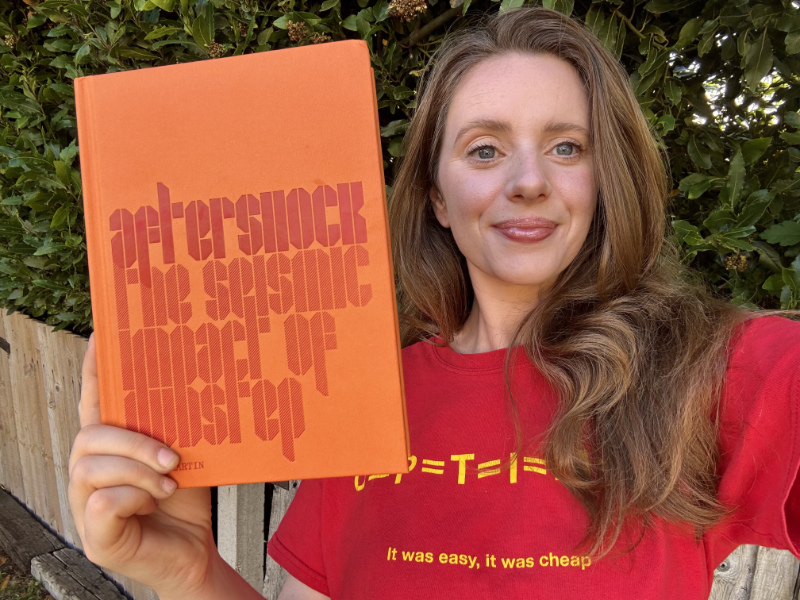
2026 was a landmark year for seasoned music writer Lauren Martin, marked by the release of her first book, Aftershock: The Seismic Impact of Dubstep – her comprehensive oral history tracing the genre’s journey from London’s outer edges to global dominance. Fresh off a string of UK and European launch parties, we caught up with Lauren to reflect on a whirlwind year of publishing, community, and inspiration.
What have you been reading this year?
Holly Dicker’s Dance or Die, the Beastie Boys’ book (simply called Beastie Boys Book), and Daniel Dylan Wray’s Groovy, Laidback and Nasty: A History of Independent Music in Sheffield.
Any new favourite films/TV programmes?
My taste in TV is generally “crime shows to fall asleep to,” but for films, I’ve watched and thought a lot about Train Dreams, My Father’s Shadow, and Late Fame.
Any new favourite tracks, records or releases from the year?
Aside from dubstep, the focus genre of my writing for Velocity Press, I’m a massive hardcore fan. I’ve been listening to a lot of Converge, Holder, and Contention. Beyond hardcore, I’ve enjoyed people like Ninajirachi, Liim, Wesley Joseph, and Citizen — a real mixed bag.
Have you been listening to any podcasts, audiobooks or radio shows?
I’ll leave NTS on in the background often, the Sleep Tracks six-hour mixes on BBC Sounds to concentrate on book editing to, and No Tags is the best for music chats.
Heard any standout DJ sets or been to memorable parties or events in 2026?
I saw Introspekt play a killer set at Peckham Palais — she is part of the future of dubstep, in my humble opinion. Benny Ill also played a three-hour “roots of dubstep” set for one of the London launch parties for Aftershock, and it was a masterclass.
Have you found any new sources of inspiration or creativity over the last year?
I took a lot of inspiration from Elijah — grime DJ, public speaker and writer — in the creative process of Aftershock. He writes a lot about focusing on why you’re doing your work and who it’s meant to speak to. That extrapolates out more questions, like caring about who connects with your work, rather than how many people connect with it. Don’t play the numbers game – make something worthwhile and the right people will come.
What are your reflections on your book now that it’s out? Has anything surprised you?
I’ve been hugely into how many lovely, passionate people I’ve met through publishing Aftershock and hosting launch parties in the UK and Europe. Seeing how active the scene is in the underground, with younger, often female artists, promoters and ravers involved at its core, has been massively uplifting and made the book feel like an even more worthwhile exercise.
Any general reflections on 2026?
The macro is anxiety-inducing, but the micro — other people, art, conversations — are a balm.
What are you looking forward to in 2027?
More events around Aftershock to show love to the dubstep community – stay tuned.