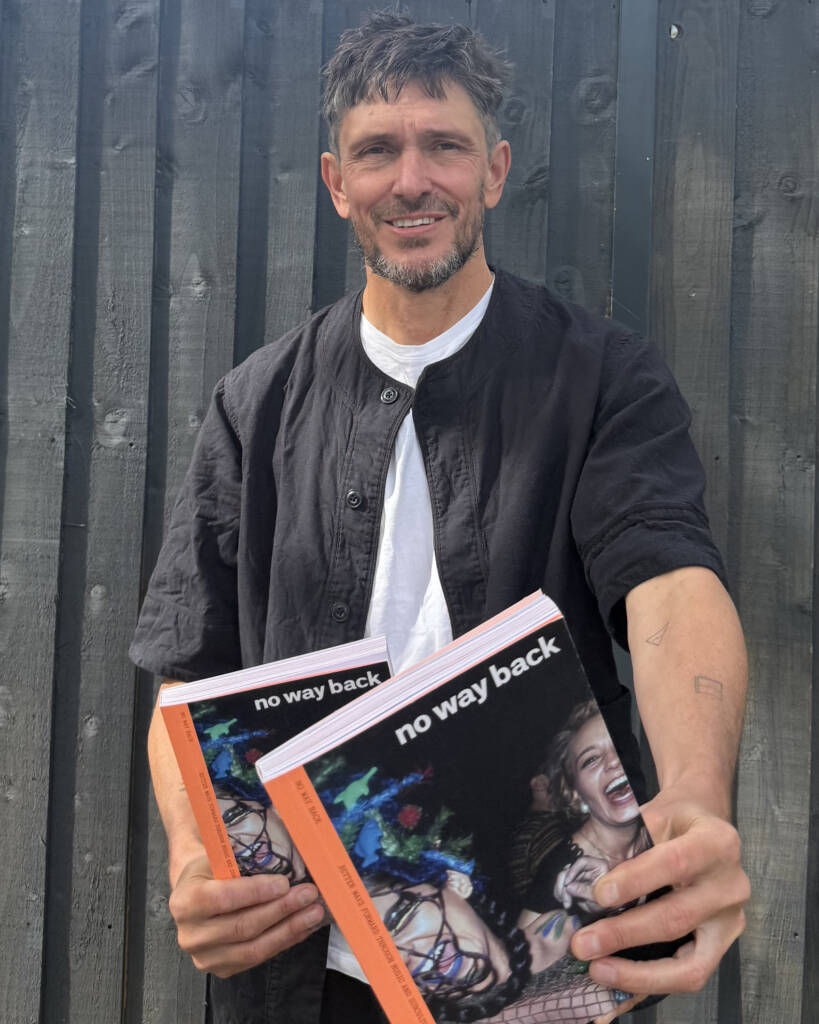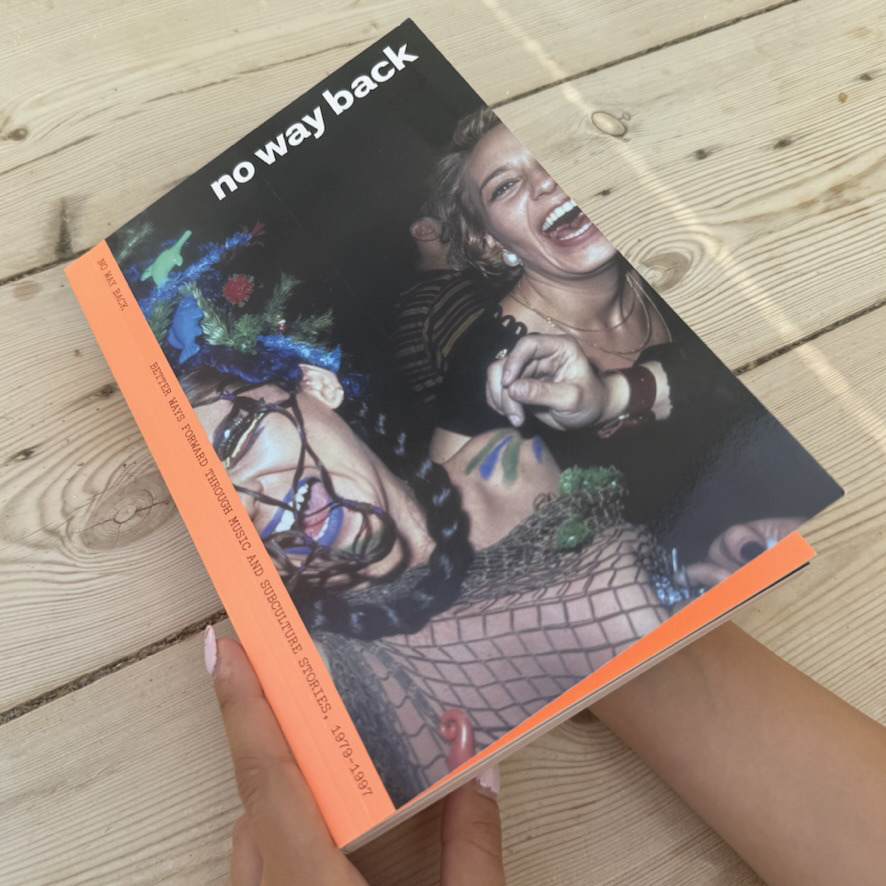
There’s a version of a magazine about the past that reeks of the loft: dusty, wistful, obsessed with what we’ve lost. No Way Back is emphatically not that. Launched by Andy Crysell – former music journalist, agency founder, and author of Velocity Press’s own Selling the Night – and co-founder Mark Maddox, it goes back to the source, republishing original journalism and photography from the music press as it was written, before anyone knew what anything would become. Its tagline says it all: learning from, not longing for, the past.
NWB001 covered 1977–1989; NWB002 stretches to 1979–1997, drawing from The Face, Village Voice, Rolling Stone, i-D, Mixmag and more. We caught up with Andy to find out how it all fits together.
No Way Back describes itself as “learning from, not longing for, the past.” That’s a fine line to walk. How do you make sure it stays on the right side of nostalgia?
Yeah, I guess it’s at the heart of what we (myself and co-founder Mark Maddox) are trying to get right, really. I don’t think there’s anything inherently wrong with people enjoying things from the past – it’s pretty natural. But it’s when it all turns a bit bitter, a bit ‘it was better in my day’, that it becomes problematic. Before you know it, what starts off as celebrating subculture can begin to reek of Reform-y attitudes and implying nothing good will ever happen again.
I think part of staying on the right side comes through the fact that there’s not much canonisation or heritage-making with these pieces in No Way Back. It’s simply people reporting on what they are seeing and trying to make some immediate sense of it all, completely unbeknownst to them that the world would still be obsessing over these sounds and scenes in some cases 50-plus years later.
And it also comes about in the conversations we have with people about No Way Back. As per the ‘learning from, not longing for, the past’ strapline, we’re interested in the threads through to today, and what comes next. To what people can learn – either in terms of what to do or from mistakes made in the past. And even though it’s easy to focus on the aesthetics of back then, as so much of it was strikingly cool, for me, it’s about more than that. It’s about strategies, infrastructure, environments and collaborative ways of working – and what of this can be adapted for today.
The concept — curating original source journalism and photography from the moment things were happening — feels like a direct response to something. What was the frustration that sparked it?
Maybe not a specific frustration per se, but definitely a sense that these pieces deserve to be resurfaced and kept alive. There’s a lot of more shortform retro stuff about club culture on TikTok and suchlike, but this longer form, first draft of history stuff is much harder to come by.
Also on our minds: formal institutions don’t care much for preserving these stories. They think other areas of culture and the arts have a higher standing. And with that comes the risk that the true origin stories, those which often involve pioneers from minoritised and marginalised communities, tend to get lost in a process of commodification by the industry. That’s how we end up with scenarios like people getting into EDM without realising they are listening to music rooted in Black and Hispanic queer communities.
Of course, we’re not the first to contribute to this – DJ History, Red Bull Music Academy, Blacktronika and plenty of others have made such a positive impact. But it’s good to also be contributing.
NWB001 covered 1977–1989, NWB002 shifts to 1979–1997. How do you decide on the time frame, and what determines which scenes and moments make the cut?
The start and stop dates for each issue have been a bit arbitrary, based on the range of pieces we felt curatorially fitted together. Our centre of gravity is dance music, Black music, club culture – but from there we can join the dots to other genres of music and to all of the wonderful stuff that circulates around the music. The design, fashion, spaces and environments, media and moments of social change.
In terms of how that means an issue comes together, we start by finding perhaps two or three pieces that we feel have some real substance to build around. Then it’s about adding pieces that provide some kind of balance between coherence and diversity. Making sure there’s a good flow and some degree of immediacy and shelf appeal, but also that it’s a title that rewards deeper exploration and perhaps isn’t too immediate.
You’re pulling from The Face, i-D, Village Voice, Collusion, Rolling Stone — publications that had very different relationships with the dancefloor. Does the editorial voice of the original piece matter to you, or is it purely about the quality of the reportage?
I think that range of voices is really interesting and part of what makes No Way Back fascinating for people. As you say, these titles all had quite different perspectives and even degrees of connection with dance music and club culture. You see them writing about it, sometimes grappling with it, in very different ways.
As we bring together future issues of No Way Back, it’s going to be important that we introduce more publications into the mix – be that better-known ones, or more niche and specialist ones. There’s a lot more searching and curating for us to do.
There’s something interesting about presenting this material in a physical, carefully designed object. Why print, and how does the format shape how readers experience the content?
Yeah, there’s obviously plenty of reasons why this would’ve been so much easier to do digitally, on Substack or wherever. But it felt important to us to make an actual physical output. There’s clearly quite a yearning among many people for things of greater craft and substance, and we also feel that, even though we might not connect with as many people as if we did this digitally, the quality of the connections will be far stronger.
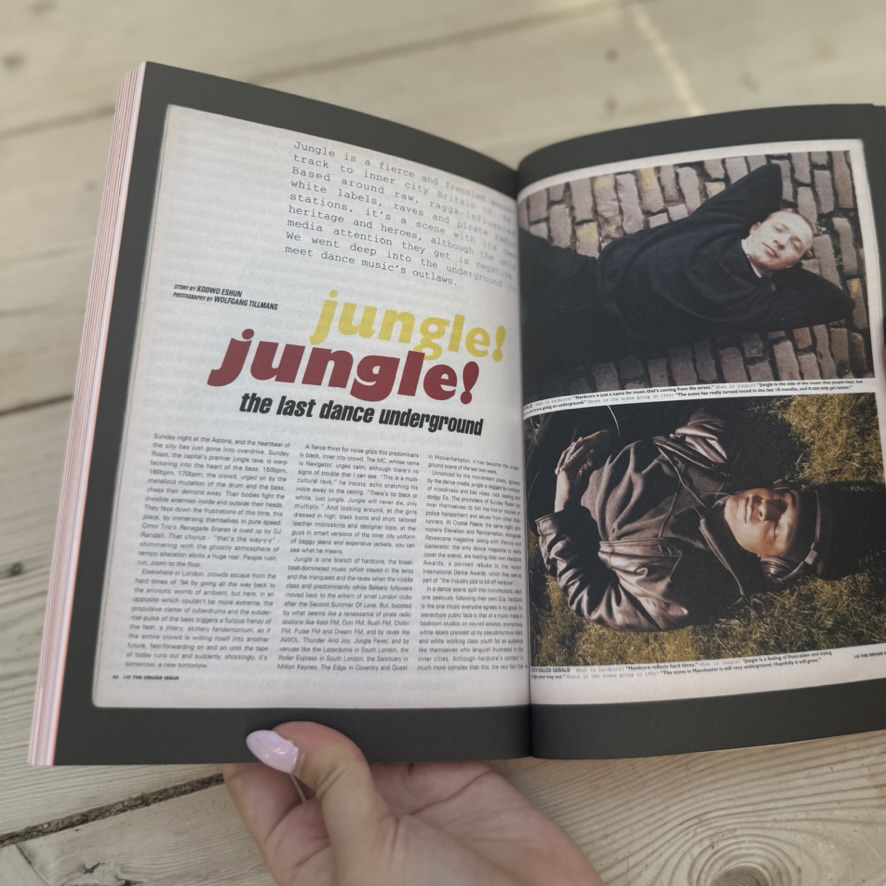
Also essential to the format is how we’ve run text from versions of each piece next to the original magazine spreads. It brings these unusual layers and textures and depth to the publication. And lots to learn from how design styles have evolved and how these often DIY forms of creativity have influenced other forms of visual communication, like advertising, consumer products and mainstream retail.
NWB002 lands with pieces on Chicago house, NYC disco underground, jungle, hip-house — scenes that were genuinely underground at the time of writing. Do you think that kind of ground-level music journalism is still possible today, or has the internet changed what “underground” even means?
I think in lots of senses it has changed what it means. Or at least how long things stay underground and the relationship and dynamics it has with the mainstream.
But though ‘the underground’ might not happen with quite the same sense of social density, tight communities and close-knit-ness as it once did, there’s still a lot to write about and document. Now it’s possible for micro-scenes to exist at global scale. A niche no longer needs thousands of people in one city; it can be 5,000 people scattered across continents. All of which needs writing about and photographing in different ways than was the case with jungle, house and so on.
Selling the Night — your book, which we published last year, covered the history and culture of nightlife promotion. How does No Way Back sit alongside that project? Do you see them as part of the same conversation?
Definitely part of the same conversation in a lot of ways. One resurfaces the first drafts of music and subculture history; the other follows what happens when those ideas move out into brands, media and the creative industries. Selling The Night is more analytical in how it explores dance music and club culture’s relationship with brands and the creative industries
What I’m especially happy about with Selling The Night is how many people have told me it’s a go-to, something they always have near at hand, for their work in the creative fields, or academia, or music and events. So less of a one-off read and more of a source of ongoing ideas and guidance.
You’ve talked about putting NWB002 together “with much love, craft and attention to detail.” What does that actually look like in practice — how long does an issue take, and what does the edit process involve?
It’s taken about six months per issue so far – though to be fair, we haven’t exactly been racing to meet specific deadlines! There’s a pretty lengthy stage of tracking down interesting material – via online databases, offline libraries in NYC and London, and increasingly from recommendations. We start to get a feel for how it’s all going to join up and then plot a first draft of the running order.
If it’s a fascinating challenge finding the material, it’s a different one again securing the rights and permissions. Often no one knows who owns the rights to this material. Lots of the magazines are no more, and plenty of them weren’t exactly that organised in issuing contracts to writers and photographers in the first place. This can all take quite a while to get to the bottom of, but paying people and crediting people feels an important part of doing this with the level of craft and attention to detail we talk about.
Independent print is notoriously hard to sustain financially. What does the economics of No Way Back look like, and what’s made it viable so far?
It’s tough, for sure, and we could definitely have made life easier for ourselves with a cheaper format, cheaper paper, etc. But it’s selling well – lots of name DJs, producers, record label bosses and so on among that number! – so we’re keeping the lights on, at least. And of course, there are plenty of things that are rewarding about making No Way Back beyond the money.
But looking beyond our own circumstances, it’s still a frustrating industry. There are now near-endless trends forecasters, strategists and cultural experts telling us from the sidelines that ‘print is back’; as part of this broader kickback against social platforms and algorithms. Meanwhile, for anyone actually involved in bringing print media projects together there are still some pretty dysfunctional and archaic elements in the process, in how things are made, distributed and promoted; elements that really get in the way of profitability, too.
It’s not really going to be ‘back’ in a meaningful way until we get to a place where making independent media feels accessible to a broader range of creatively minded people – not just those with financial safety nets, industry connections or the ability to absorb the risk. Independent media matters because it brings new voices, perspectives and ideas into culture. If only a relatively narrow group of people can afford to create it, we inevitably narrow the stories told and the possibilities that get imagined.
What’s the ambition for No Way Back from here — more issues, different formats, events? Where do you want to take it?
All of the above, really. I think being anchored in print outputs, offline publications, will be important but so long as we are exploring the subcultural past in interesting, creative ways it can extend out in other ways. Such as events, podcasts, documentaries, and interesting partnerships.
And we can also move out in different directions beyond music. I’m sure music will remain close-by but fashion, design, media, travel, legendary buildings and neighbourhoods – there are amazing histories of independent creativity to explore in all of these and more.