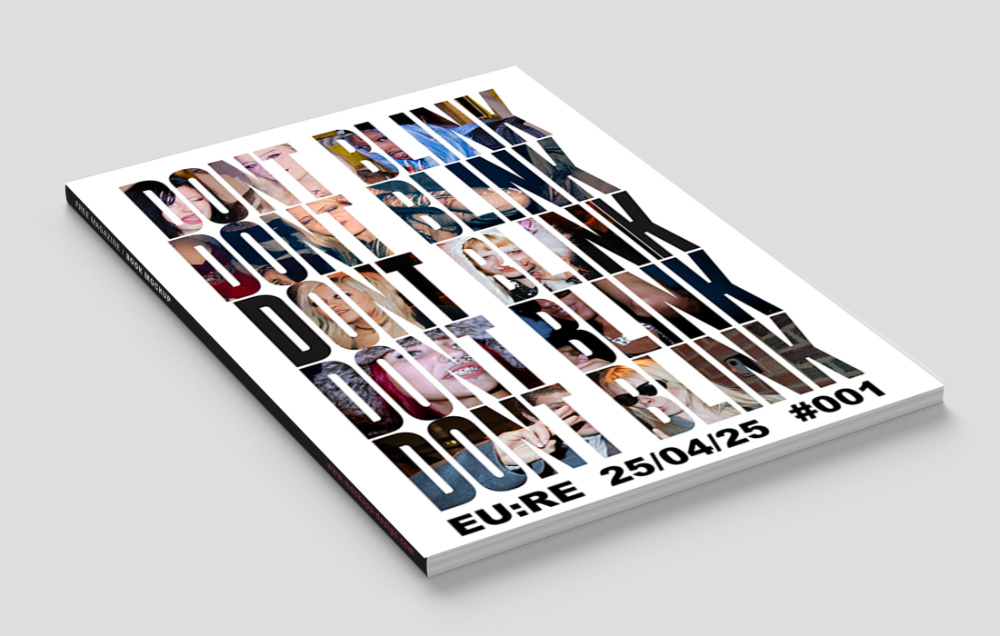
Club nights live and die in the moment and most of them go undocumented. Don’t Blink is trying to change that. Created by photographer and journalist Heloise Darcie, it’s a zine built around a single night, captured as it happens: no hindsight, no retrospective gloss, just the people, energy and atmosphere of a night out preserved in print before the memory fades. We caught up with Heloise to talk photography, nightlife and why the dancefloor deserves its own archive.
Don’t Blink started as a way of documenting a single night as it was actually happening, rather than looking back on it. Where did that idea come from, and what was the first night you documented?
The idea formed from a few conversations I was having at the time with friends and mentors about my frustrations with freelance working. One being that I would watch magazines attempt to cover scenes and sum them up in a tidy little article, looking from the outside in. Once published, I would then watch everyone in the scene not take it seriously, as it would invariably be out of date by the time of publishing or have got the wrong end of the stick about certain aspects.
The second frustration was just the process of working freelance personally, alongside writing articles, I like to format them and photograph them as part of a wider piece (something I had been doing with previous zines from 2022-2024). Alongside my freelance work, where so much of my time was taken up by pitching and invoicing and chasing up and editing the piece out of recognition, I just wanted an outlet where I could have full creative control and present my words and research the way I saw fit.
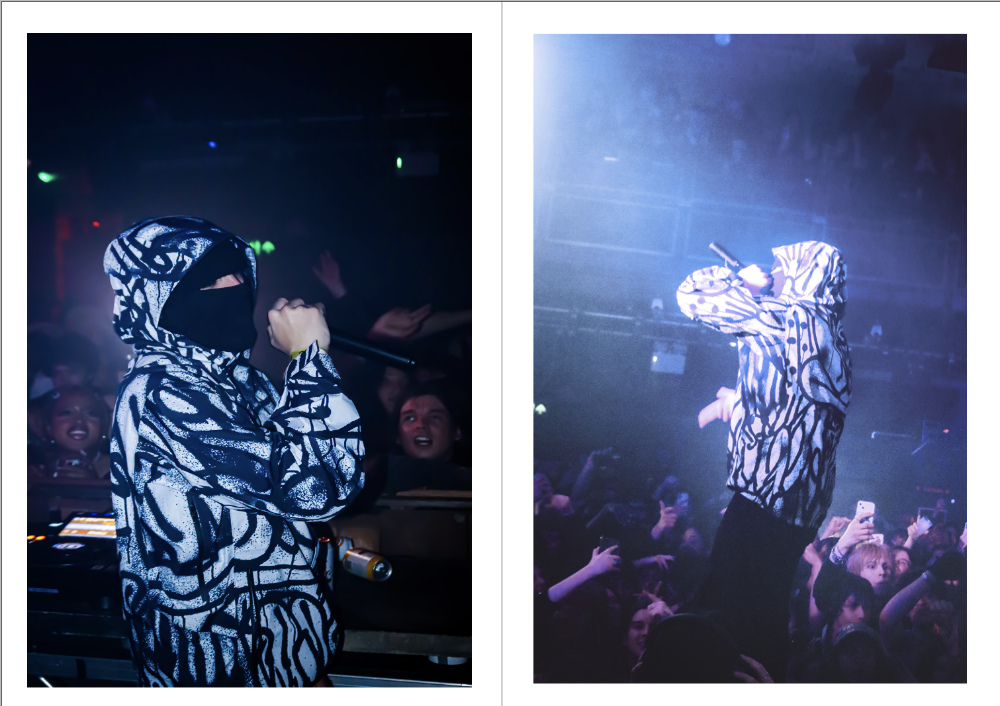
The first night I documented was EU:RE, a night at The Cause with Bassvictim, Esdeekid, and Rooster on the lineup. I knew some of the artists were on the verge of gaining mainstream popularity, and I also knew enough people in that scene to be sure I would get the full access and interviews required to cover the night properly.
What does the process look like on the night itself — are you working to a plan, or is it instinctive?
I do work to a plan which I try to stick to. I start by writing down all the set times and figuring out whose set I really want to photograph or write about. Then I’ll be contacting the artists, the organisers or the managers to arrange a time during the night to interview them. Finally, in between all of that, I set aside time for interviewing the crowd (or, in the case of Lost, checking out the smaller rooms or the cinema). On the night, plans might change, so I have to be flexible, but as a very Type A person, I do try to stick to the plan as much as possible.
You’re capturing something that’s by nature fleeting and chaotic. How do you decide what makes it into the final zine and what gets left out?
I try not to exert too much of my own judgment onto the final cut; I don’t want to leave something out just because it doesn’t fit with my vision of the scene, as that goes against the premise of Don’t Blink. Imagery-wise, I choose the images which are the best in terms of composition or expression – my work as a photographer is always the less posed the better, so that’s how I select them.
For the interviews, I often get the artists or managers after the night asking for a copy of the draft and they may want to cut a few compromising details, which is always frustrating, as that’s usually the best stuff, but I do push back when it’s worth it. With the other writing, I cut out anything boring. I want the coverage to be lively – so you can read it and feel as though you’re there with the writer.
Don’t Blink feels very deliberately physical — a printed object rather than an Instagram story or a Substack. Why was print the right format for this?
I’ve always loved print, I think you can execute a concept far better in the physical format when there aren’t popups or ads or Substack branding in your field of view – your space to do as you like with. We’ve recently seen The Face close down and delete their website, and the only remaining copies of the mag are in people’s houses and on their bookshelves (I’ve even lost an article I wrote for them last year that was only online).
I think this sort of thing happening reminds people of the power of print. I do have my own Substack, but for ideas that are super fleshed out and not standalone articles, I’ll always gravitate towards print; it serves as an artefact for documenting culture that will never get deleted or wiped – something we need more of.
The club photography and the journalism feel very intertwined in Don’t Blink. How do you balance those two roles on the night — are you ever fully one or the other?
As mentioned before, I do section my night out with a timeline so I’ll spend half an hour photographing and then go on to interview. It is a real struggle, though and for the next issue, I will be getting more helpers so I can capture as much as possible and have more content to narrow down from. Though I doubt I’ll stick to just one or the other for my own role, to get a real sense of the energy and the feeling in a room, having my photos to refer back to is invaluable.
What has surprised you most about the response to Don’t Blink so far — from readers, from the scenes you’ve covered, from the nights themselves?
I know the audience is the most important thing when you make a magazine, and while I thought Don’t Blink would be of interest to people, I didn’t have the clearest idea of exactly who that audience was before publishing. I think the biggest surprise was seeing how many people outside the UK would be interested in and buy my mag. I had imagined it would be more London-based since that’s where the nights are all set.
I would say the majority of my online orders have come from mainland Europe, Australia, and Ireland, and I think there’s a real curiosity people have about scenes outside of their own city. London is known for its subculture and nightlife history, but has recently been the topic of much ‘nightlife is dying’ discussion, which isn’t untrue – but people will always find a way to party. Don’t Blink looks from the inside out (rather than the outside in), which people really gravitate towards as a way to truly understand a scene that they may not be a part of themselves but want to know more about.
 Is there a night or a scene you’re yet to document that you’re particularly keen to get to?
I have a few ideas for the next mag. People keep telling me to hurry up and make the next issue, but I’m wary of covering something I’m not 100 per cent into for the sake of it – I don’t want to force an issue, and I think the readers would be able to tell. I’d much rather the issues come out less often but be really exciting and sought after when they do.
I’m keeping an eye on the crusty free party scene, which I used to be on the edge of a few years ago, and also looking at some of the Unfold-esque nights. I really want to make sure each issue is totally different from the others and covers a scene or something within an established scene that is up-and-coming, rather than something that’s been around forever.
You describe yourself as a freelance journalist and photographer — which came first, and how did the two end up working together?
So I started off doing a degree in Fashion journalism. At the beginning of that degree, I really hadn’t found my niche for the first year and a half until I started going to hardcore raves around the same time we were given a free-for-all project. I decided to make a zine and took my holiday camera to the raves to photograph the looks alongside my writing, and eventually scaled up to a proper camera in the following years. So the writing technically came first, but I only really found my footing with the writing when the photography started and they were in conjunction.
Club and nightlife photography has its own very specific challenges — low light, movement, people who may or may not want to be photographed. How have you developed your approach to shooting in those conditions?
Since I’ve always been doing nightlife photography, I find the settings required for low light and movement super simple – it’s the daytime shooting that I struggle more with, since that’s not my norm. In terms of the people who don’t want to be photographed, that’s a lot trickier.
Obviously, if I capture someone in a very compromising position, I usually don’t use the photo. In the past, photographers could pretty much shoot and publish whatever they wanted, but with social media now, it’s a lot easier to trace a photo back to a specific person who may not want to be publicly associated with that image.
However, I do have a problem with people who don’t like a photo of themselves just out of vanity, the photo looks fine, they look good, but it might not be their ‘good side’. I think once again with social media, it’s made us feel like we should have full control of our image and can choose exactly how we’re seen – that’s just not true. When you step out onto the street, people see you through their eyes. Why should an image taken of you in a public place not be the same? If someone puts their hand up in the club or asks me to delete a photo the second I’ve taken it, I will, but if you pose for the picture and only have a problem with the photo once it’s in print, I can’t help you there.
Who are the photographers — in club culture or beyond — whose work has shaped how you see and shoot?
I think all the obvious photo documentarians, Corinne Day, Nan Goldin, Derek Ridgers, Peter J Walsh, Davide Sorrenti – around the time I started taking photos, I got an internship at IDEA Books, who sell vintage photobooks and publish their own too. This gave me the best education into photographers and I had unparalleled access to incredible references and sources, which I always find myself wishing I could go back to.
Also, that same year I went to a Wolfgang Tillmans exhibition at the MoMA, which I was obsessed with, and I still have the exhibition poster right in front of my bed – it’s the first thing I see when I open my eyes every morning.
Is there a single image you’ve taken that you feel best represents what you’re trying to do with your work?
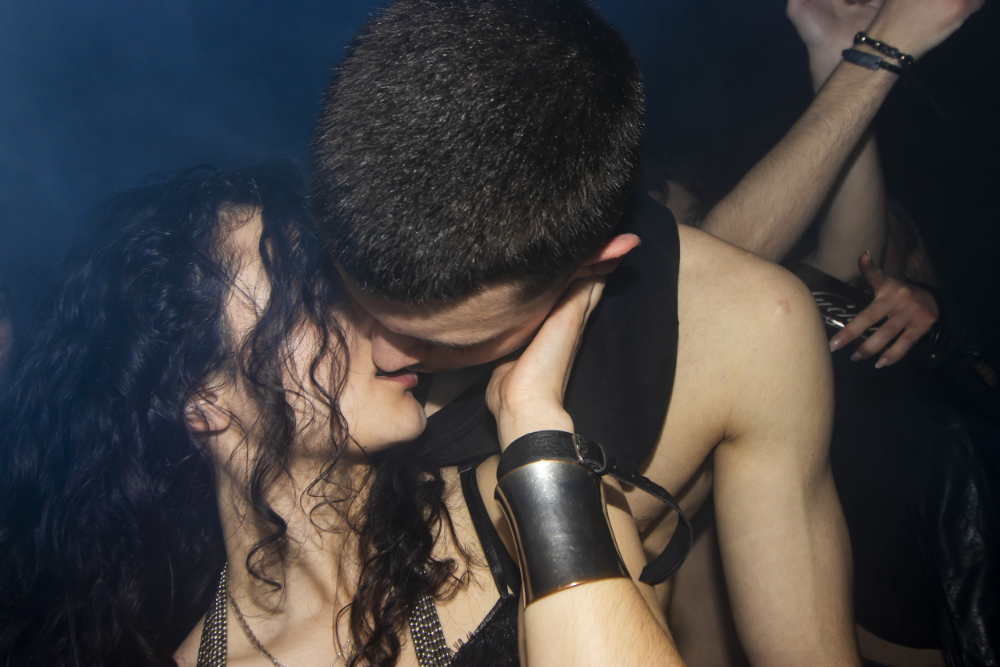
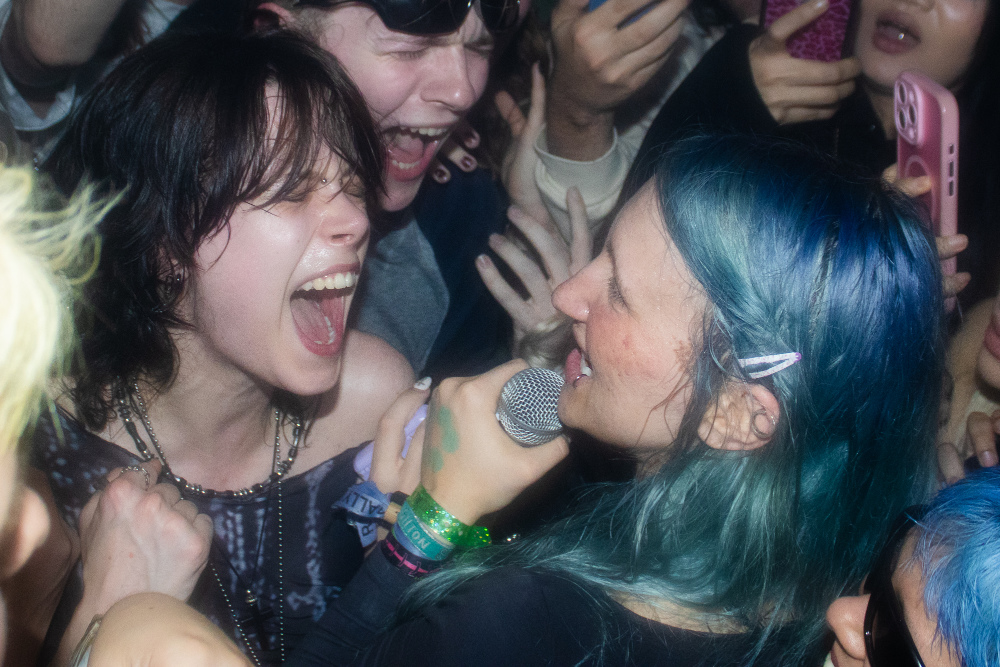
Probably one of these two images – I just wanna get the most human action or emotion in my pics 🙂