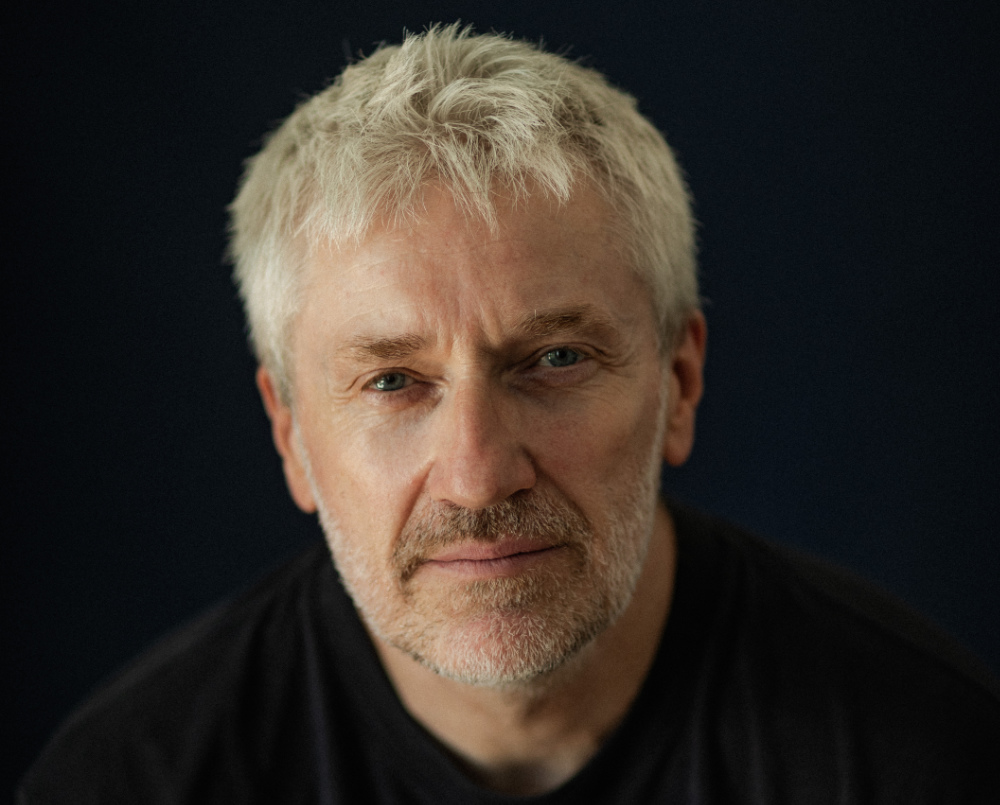
We caught up with David Reid to discuss his fascinating new book, Transients: How Music Technology Transformed Time. From the neuroscience of musical memory to the DIY magic of cassette tapes and the rise of AI, he explains how the tools we use to capture and shape sound have fundamentally rewritten our relationship with time itself.
What is a transient, and why build a book around it?
The title has a dual meaning. Obviously, transient usually means something ephemeral, and for millennia that was how music existed: a brief moment in time, heard and then gone forever. That changed with the arrival of recording technology. Once we could capture sound, the next transformation was to alter that recording, and that’s where the second meaning comes in.
In audio engineering, a transient is the peak at the start of a waveform. It’s the moment of impact that marks the beginning of a sound. In that sense, the word transient refers to the way that we visualise musical time today – as a sound object that can be manipulated.
Was there a single moment when the idea first came to you?
The idea first came about while I was still working at Ableton. For several years I helped curate Loop, a three-day “summit for music makers” – a cross between Red Bull Music Academy and a music tech TED event, with lectures, artist panels, performances and workshops from right across the musical spectrum.
That’s where I first started thinking about music’s inherent temporality. Initially, I had an idea for a presentation about tempo: how speeding up or slowing down music transforms how it feels, not just how it sounds. Transients grew from there.
Is this a history of music technology, a science book or a memoir?
It’s more personal than a straight history of music technology. I wanted to tell the story of the music technology that shaped my life, because it enabled me to move from being a consumer of music to someone who participates in and produces it, despite having no formal musical training.
So while Transients isn’t a memoir as such, each chapter opens with a flashback to a moment when my relationship with music and time came into focus – usually as a result of a particular technology.
How did those technologies “transform time”?
Musicians have always manipulated time for effect. Through rhythm, tempo, duration, and so on. But technology amplifies all of those possibilities and creates new ones. The book opens with a piece of algorithmic music called Longplayer that plays for a thousand years, for example, but it also looks at what happens when you speed music up – pushing tempo beyond the limits of physical playing. Or when you slow it down.
Memory has also been transformed – we’ve created an archive of recorded music that is too vast for any human to comprehend. So we’ve delegated that remembering to machines. The final chapter explores what happens when a technology capable of producing music ingests all that data, rather than simply storing it.
Is the book a warning about AI?
Many of the technologies explored in the book were met with trepidation and fear when they were first introduced. AI is similar in that respect but different in many others. The technology itself is certainly transformational, but the output is inherently backwards-looking because the models are trained on this archive of what has already been done. In that sense, AI music feels to me like stasis rather than progress.
Where does the neuroscience come in?
Recording is a form of memory, so I wanted to understand how human memory differs from computer memory, and why music is such a powerful trigger for memory when it’s so fleeting.
I also spoke to researchers into flow states to understand why time seems to disappear when you’re engrossed in activities like making music or dancing. The way the brain perceives time strongly influences how and why we make music in the first place. Our brains are like time machines – constantly switching between past, present and future.
Who else did you talk to?
It was important to me to get artists’ perspectives too because, whether they recognise it or not, the material they’re working with is time. I loved this line from the ambient artist and educator Celia Hollander: “Music is this endlessly fascinating way to structure time.” She shares my fascination with music and time, so we had a great conversation.
I also spoke to former Ableton colleagues, including the company’s founder Gerhard Behles, who is both an electronic musician and a technologist; to Lex Dromgoole, a producer and AI founder who has worked with Jai Paul, Arca and Björk; and to writers and cultural critics like Kieran Press-Reynolds and Jules Wadsworth aka Lil’ Internet, who had great perspectives on AI and the future of music.
Did writing it change how you listen?
It was interesting to listen back to a lot of music of the last few decades and to pay attention to the fingerprints left by each successive technology. Turntables were foundational to hip-hop’s sound. Cassette tape gave rise to mixtapes, four-track demos and pause-button edits – a whole DIY recording culture which then laid the groundwork for sampling and DAW’s. If you listen carefully, you can hear this whole lineage stretching back in time. Every technology leaves its mark – like the rings of a tree.
If readers remember one idea, what should it be?
One thread running through the book is how listening has changed in the attention economy. Time is our most precious resource, and attentive listening increasingly feels like an act of resistance against a tech industry that wants to claim every available second of our attention.
When tech companies talk about removing friction, what they’re often removing is the time we spend with things (and people). I think devoting that time to listening and to making music is one of the most fulfilling things we can do as humans.
-
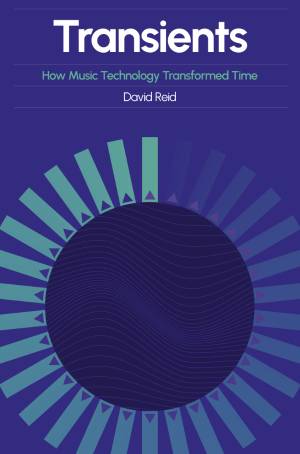
Transients: How Music Technology Transformed Time
Price range: £9.99 through £14.99