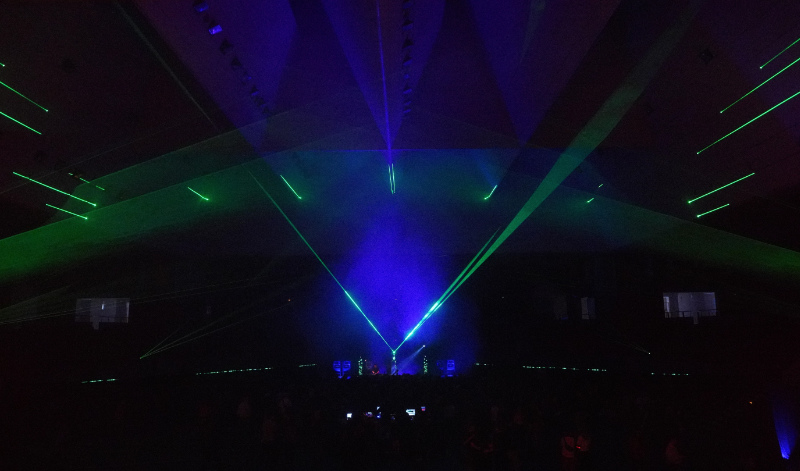
This March, Mostra returns to Barcelona with its distinctive blend of forward-thinking electronic music, community-led programming and a clear commitment to independence, care and experimentation. More than a festival, Mostra has become a meeting point for artists, collectives and audiences who see club culture as something social, political and deeply creative – not just something that happens on a dancefloor.
Ahead of this year’s edition, we spoke to the team behind Mostra about the festival’s origins, its relationship with Barcelona’s local scene, the importance of collaboration and exchange, and how they see the future of experimental electronic music unfolding.
Velocity Press will also be in attendance at Mostra, running a book stall as part of the festival’s wider programme, bringing a selection of our titles that explore club culture, electronic music history, and the politics of nightlife. If you’re coming down, come say hello, have a browse, and join us in celebrating the ideas, sounds and spaces that Mostra champions so fiercely.
What inspired the creation of Mostra, and how has the festival’s mission evolved since its first edition?
Mostra was born in the silence of the pandemic lockdowns, a time of uncertainty when culture came to a halt. We felt a vital need to celebrate life again, but we wanted to return differently: not to the noise of the massive, impersonal events that often saturate Barcelona, but to something essential. We wanted to create an alternative that was “proudly small” and deeply rooted in the city’s artistic fabric.
Since our first edition, our mission has evolved from simply creating a space to dance into a commitment to “write the scene”. We have solidified an independent, non-profit model that proves another way of doing things is possible: prioritising curation, community, and social values over commercial expansion.
We sometimes like to refer to Mostra as a project that goes beyond a festival, and that’s why we kind of keep ourselves active all over the year with our heartbeats, such as with our series of events ExtraMostra or our podcast show MostRadio.
How does Mostra balance being an alternative to large commercial festivals while staying true to its core values of inclusivity and community?
We balance it through determination and independence. By remaining a non-profit association without dependence on large investment funds, we retain the sovereignty to make artistic and ethical decisions that might not work in a purely commercial model. We cap our attendance at 1,000 people to ensure the experience remains human and comfortable.
This scale allows us to foster a true community where the audience is part of the scene, not just spectators. Inclusivity isn’t a quota for us; it’s structural. We work tirelessly to reduce the gender gap in a historically male-dominated scene and implement protocols like MostraRespect to ensure a safe environment for everyone.
How does Mostra work to support local Barcelona artists and collectives?
The local scene is the backbone of Mostra. We don’t just host the festival in Barcelona; we are a project for Barcelona. Approximately one-fifth of our lineup consists of artists who live in or are deeply connected to the city, often sharing the single stage with international headliners.
Beyond the festival days, we also run ExtraMostra, a series of satellite events in local, national and international clubs throughout the year, giving visibility to local and emerging talent in different contexts. We also invite local collectives and record stores to participate in our Fira (fair), creating a physical meeting point for the city’s underground ecosystem.
How important is the socio-cultural context of Barcelona to the festival’s identity and programming?
It is fundamental. We define ourselves by being rooted to our home city. Barcelona has an overwhelming artistic vitality but often lacks spaces that protect experimentation from market pressures. We aim to contribute positively to this ecosystem, working with local suppliers and social economy initiatives, such as our collaboration with the Top Manta brand (the union of street vendors) for our merchandise.
Our identity is inextricably linked to the city’s sociocultural background, and our programming is thus reflected on that too, giving space and visibility to artists and sounds that may have been in the background for long.
Can you describe any partnerships with Barcelona-based record stores, clubs, or community projects that help shape the festival experience?
We actively generate synergies with the city’s cultural agents. For instance, our Fira on Saturday hosts stands from local record stores, labels and private collectors, turning the festival into a hub for vinyl culture. We collaborate with venues like Hangar or Casa Montjuïc for specific programming that requires unique acoustics or atmosphere.
On a social level, we work with cooperatives for catering, such as Abarka and have directed funds to collectives like Kantina Migrante, reinforcing our belief that a festival should leave a positive social footprint.
Apart from that, over nearly five ExtraMostras seasons, we have held a total of nearly 100 events. In Barcelona, this includes venues such as Laut, Sala Taro, Upload, Centre Cultural Albareda, Espai Jove la Bàscula, Paral-lel 62, 33|45, Bar 18, Salvadiscos, Curtis Audiophile Café, Red 58, Buena Onda Social Club, Moog, Switch Pocket Club, Canino, Apolo or Razzmatazz.
What genres and musical expressions does Mostra aim to highlight, and how do you select artists for the lineup?
We focus on avant-garde, experimental, and what we call “horizontal and vertical sounds”, that is, music that invites attentive listening as much as dancing.
Our selection process rejects the tyranny of the algorithm. We look for artists with a unique voice who often fall outside the commercial festival circuit.
We curate a narrative that flows from ambient and textural introspection to the rhythmic intensity of deep techno and futuristic breaks, always prioritising quality and depth over hype.
How do you define the role of experimental and avant-garde music within the broader electronic music scene?
For us, experimental music is the “raw” material of the scene; it is a space for resistance and thought. In a broader scene often obsessed with the “drop” and the “hit,” avant-garde music offers a necessary pause and a challenge. It demands active engagement from the listener.
It is the heartbeat of innovation, ensuring the culture doesn’t stagnate into mere entertainment. At Mostra, we view these genres not as niche but as essential to understanding the future of electronic sound.
From your perspective, what makes an unforgettable live set at Mostra?
An unforgettable set at Mostra feels honest. Because we have only one single stage and no timetable clashes, the artist has the undivided attention of the entire audience. There is no rush, no fear of missing out.
This allows for sets that build slowly, taking risks and creating a communal journey. When the music, the unique architecture of our venues, and a respectful, attentive crowd align, it creates a moment of pure connection, a collective “heartbeat”.
Mostra includes elements like Fira, Mostra’m debates and workshops, and MostRadio – how do these components enhance the attendee experience?
These components ensure that Mostra is a platform for culture, not just consumption. Mostra’m provides a physical space for reflection and debate on critical issues, such as, for example, sustainability and gender within the industry.
MostRadio and Fira allow our community to engage with the music on a deeper level, discovering new labels, releases and ideas behind the tracks. They transform the attendee from a passive spectator into an active participant in a living cultural dialogue.
What makes Casa Montjuïc and the Vall d’Hebron Pavilion meaningful venues for the 2026 edition?
For our fifth anniversary, these venues represent our evolution. Casa Montjuïc is a space of introspection, acting as a bridge to the most immersive soundscapes for our opening. It will be our venue for our Opening Ceremony on Thursday 12th March.
The Vall d’Hebron Olympic Pavilion, however, marks a turning point and will host our two long Semifinals on Friday and Saturday, as well as the Grand Finale, on Sunday March 15th. We are transforming this iconic space into the “heart” of our community for three full days. It allows us to offer more hours of dancing than ever before (until 3 am on Friday and Saturday) and create a proper club atmosphere while retaining the comfort and safety of a festival. It symbolises our ambition to be a central meeting point for the city’s electronic culture.
In what ways does Mostra aim to build bridges between Barcelona’s scene and international music cultures?
We achieve this through our Guest Country initiative. Each year, we invite a specific country to form part of the lineup, fostering a direct cultural exchange. We have previously hosted the USA, Switzerland, the UK, and Japan.
For 2026, our Guest Country is France, honouring its immense influence on electronic music history. As per the festival, we carefully curate seminal international artists who perform at Mostra while showcasing our local talent to the world, creating lasting connections between scenes.
As Mostra grows, what future directions or new artistic collaborations are you excited about?
We are excited about the possibilities of our new dates in March, moving away from the traditional Easter window to open the cultural season. This shift, combined with the extended hours at the Pavilion, opens up new artistic directions, allowing us to explore darker, more club-oriented sounds alongside our signature horizontal programming. We are also eager to deepen our collaborations with French collectives and institutions for 2026, as well as to expand our international ExtraMostra network.
What can people look forward to with this year’s edition?
People can look forward to a celebration of five years of resistance and passion. It will be a turning point: a lineup that brings together the sounds of tomorrow with legendary figures, a new expansive layout at Vall d’Hebron with a comfortable outdoor area, and the unique energy of a community that has grown together. It is an invitation to reject the noise and find the authentic beat.